Stainless Steel vs Silicone Grill Tools: Which Material Is Right for You
Recommended picks

What Stainless Steel Tools Do Well
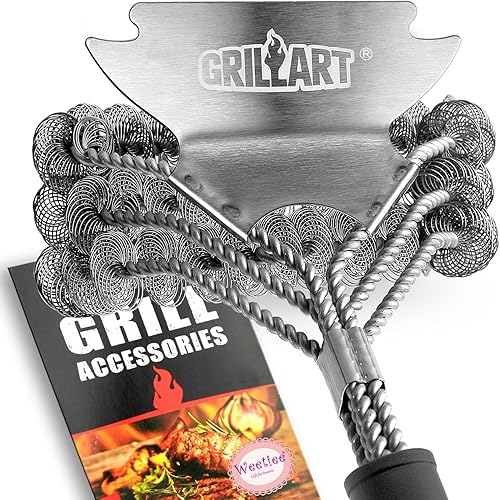
Stainless steel is the workhorse of the grill tool world. It tolerates direct flame contact, high radiant heat, and the rough scraping a cast iron grate demands without warping or off-gassing. The Grillart RFS017, a stainless steel tool with 21,800 reviews and a 4.3-star rating at $24.99, is a good example of what makes stainless popular: the material is rigid enough to flip a thick brisket flat without bending, and it rinses clean under the hose. Stainless tools also last seasons with minimal care, making them cost-effective over time. The main downside is that bare metal conducts heat up the handle if the handle is also metal, so check that any stainless set you buy includes a full-length handle rather than a short all-metal grip.
Where Silicone Tools Have the Edge
Silicone tolerates temperatures in the range of 400 to 600 degrees Fahrenheit depending on the grade, which covers most backyard grilling situations. The real advantage of silicone tips is surface protection: on porcelain-enameled grates or nonstick griddle plates, bare metal can scratch and chip the coating over time, while silicone slides underneath food without catching edges. Silicone also grips wet surfaces better, which matters when you are turning a whole fish fillet or picking up a burger that has released a lot of fat. The Kingsford BB21250, rated 4.3 stars across 1,100 reviews at $9.99, uses a nylon and rubber construction that illustrates another advantage: handles in these materials stay comfortable even when the air around the grill is hot. The tradeoff is that silicone tips on spatulas tend to flex slightly, which can make them feel less precise when you need to get under something that is sticking.
Heat Resistance: Where Each Material Actually Stands
Stainless steel does not have a heat limit in normal grilling conditions. It will discolor at extreme temps but it will not melt or deform the way lower-quality plastics can. Food-grade silicone rated for 450 to 600 degrees Fahrenheit is fine for direct grill work, but cheaper silicone blends may start to degrade or pick up odors at the high end of charcoal temps, especially if a tip sits directly on a coal-hot grate for an extended period. For pellet and gas grills that typically run 225 to 450 degrees, quality silicone holds up without issue. If you run charcoal or wood fires that routinely push 600-plus degrees, stainless is the more reliable choice for grate contact.
Cleaning and Maintenance
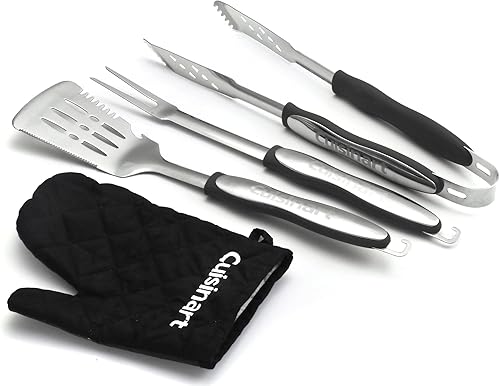
Both materials are straightforward to clean, but they have different failure modes. Stainless develops a carbon buildup from grease and smoke that can be stubborn to scrub off if you let it accumulate, though the Cuisinart CGS-134BL set (stainless steel, 4.6 stars, 5,900 reviews, $30.99) comes with tools sized at 18.6 inches, which gives you plenty of handle to keep hands clear while you rinse them hot off the grill. Silicone tips are easier to degrease since the nonporous surface releases oils without scrubbing, but silicone can stain from tomato-heavy sauces or rubs over time. Both stainless and silicone tools are generally dishwasher-tolerant, though hand-washing extends the life of riveted handles on either type.
Matching Tools to Your Grill Surface
The grate material on your grill is the single most useful filter for this decision. Cast iron and plain steel grates are tough surfaces where stainless tools work without concern. Porcelain-coated cast iron, enamel-coated steel, and nonstick griddle inserts are where silicone-tipped tools pay off, since they reduce the risk of scratching a surface that can chip and rust if damaged. Ceramic-coated surfaces, which appear on some pellet grill grates, are the most scratch-sensitive and generally benefit most from silicone. If you own multiple cooking surfaces or switch between a gas grill and a flat-top griddle, a stainless set plus one silicone-tipped spatula covers all scenarios without needing a full separate kit.
Price and Longevity Compared
Stainless steel tools generally cost more upfront for a comparable set but last longer before needing replacement. A quality stainless spatula or tong will routinely last five or more seasons with normal use. Silicone tips on hybrid tools can crack or peel at the bond point between the tip and the metal shaft after heavy use, especially if the tool is frequently dropped or stored loosely in a drawer where the tip is compressed. Full-silicone tools tend to be cheaper per piece but may need replacement sooner if used over open flame regularly. For a budget-conscious griller, a mid-range stainless set is often better value over two or three seasons than repeatedly replacing soft-tip alternatives.
Common mistakes to avoid
- Buying all-metal stainless tools with short handles and burning knuckles every session because there is no heat buffer between the grate and your grip.
- Using silicone-tipped spatulas on a cast iron grate running 700-degree charcoal temps and cracking the tip within a season.
- Assuming nylon and silicone are interchangeable. Nylon can melt at the higher end of grill temps; check the rated temperature before using any plastic-adjacent tool over direct flame.
- Ignoring handle length. An 18-inch tool keeps your hand a reasonable distance from the fire; anything shorter than 16 inches is awkward on a full-size grill.
- Putting riveted-handle tools through the dishwasher repeatedly. Water trapped under the rivet eventually loosens the joint and the head wobbles when you need it to be rigid.
- Buying a set that duplicates the same tool in four sizes instead of covering distinct functions. One spatula, one pair of tongs, one fork, and one basting brush covers almost every grilling task.
Frequently asked questions
Can silicone grill tools go directly on a charcoal grate?
Food-grade silicone rated to 450 degrees Fahrenheit or higher can handle brief contact with a charcoal grate, but prolonged resting on a very hot surface can degrade lower-grade silicone over time. For heavy charcoal work where the grate runs extremely hot, stainless is more reliable. If you do use silicone tools over charcoal, keep them moving rather than resting the tip on the grates between flips.
Will stainless steel tools scratch a porcelain-coated grate?
Metal tools can scratch porcelain enamel if you use them aggressively, particularly when scraping under food that is sticking. Thin tips or rough edges on a spatula are the main culprits. If your grill has porcelain-coated grates, silicone-tipped tools or a spatula with a smooth, beveled edge reduces that risk. Regularly preheating your grates and keeping them lightly oiled also reduces sticking so you need less force with any tool.
How do I know if silicone grill tools are food-grade quality?
Look for tools that specify food-grade or FDA-compliant silicone and list a rated temperature of at least 450 degrees Fahrenheit. Products that omit a temperature rating or only list a generic material description are harder to evaluate. Established brands with a meaningful number of reviews, such as products with thousands of verified purchaser reviews, give you more reliable information about real-world durability than new listings without a track record.
Is a 5-piece or 4-piece grill tool set worth buying over individual tools?
A set makes sense if it covers distinct functions rather than duplicating the same tool in different sizes. The most useful combination for most grillers is a long spatula, a pair of locking tongs, and a basting brush. If a set adds a corn holder or a skewer alongside those core tools, that is fine. If it pads the count with a second spatula or a serving fork you will never use, individual pieces at the right quality level are a better buy.
Can I use the same grill tools for a gas grill and a charcoal grill?
Yes, with the caveat that charcoal grills run hotter and the heat is less predictable than a gas burner dial. Stainless steel tools are the safest choice if you switch between both, since they hold up at any grill temp. If you use silicone-tipped tools, check that they are rated for the higher end of charcoal temps, around 500 to 600 degrees Fahrenheit, rather than only the lower range typical of countertop cooking.